
Reflections from the Hill: RCUSA Advocacy Days 2026
By: Allison Severns, Communications Director & Programs Manager at HMI
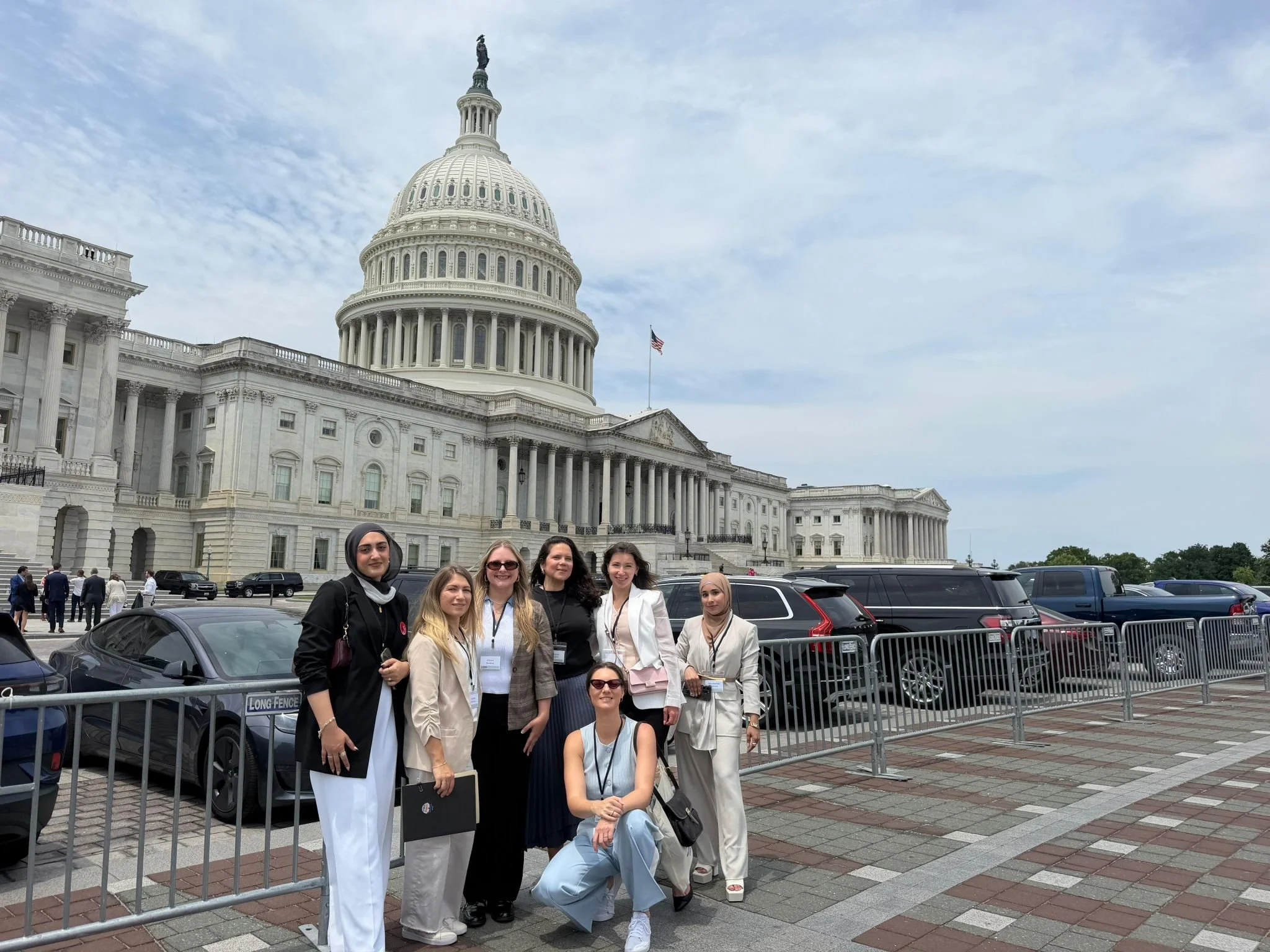
Southern California RCUSA Delegation members in front of the Capitol Building.
There is nothing that quite prepares you for the scale of the nation's capital. We spent most of our days moving between the Rayburn and Cannon buildings on the House side and the Hart Senate Office Building, and the whole area is overwhelming in a way that is hard to describe until you are standing in it: the size of everything, the pace, the sense that the decisions being made in these corridors reach all the way back to the newcomer families we serve in Riverside and around Southern California. We had traveled there to do one thing, which was to carry those families' stories into the rooms where decisions about their lives get made.
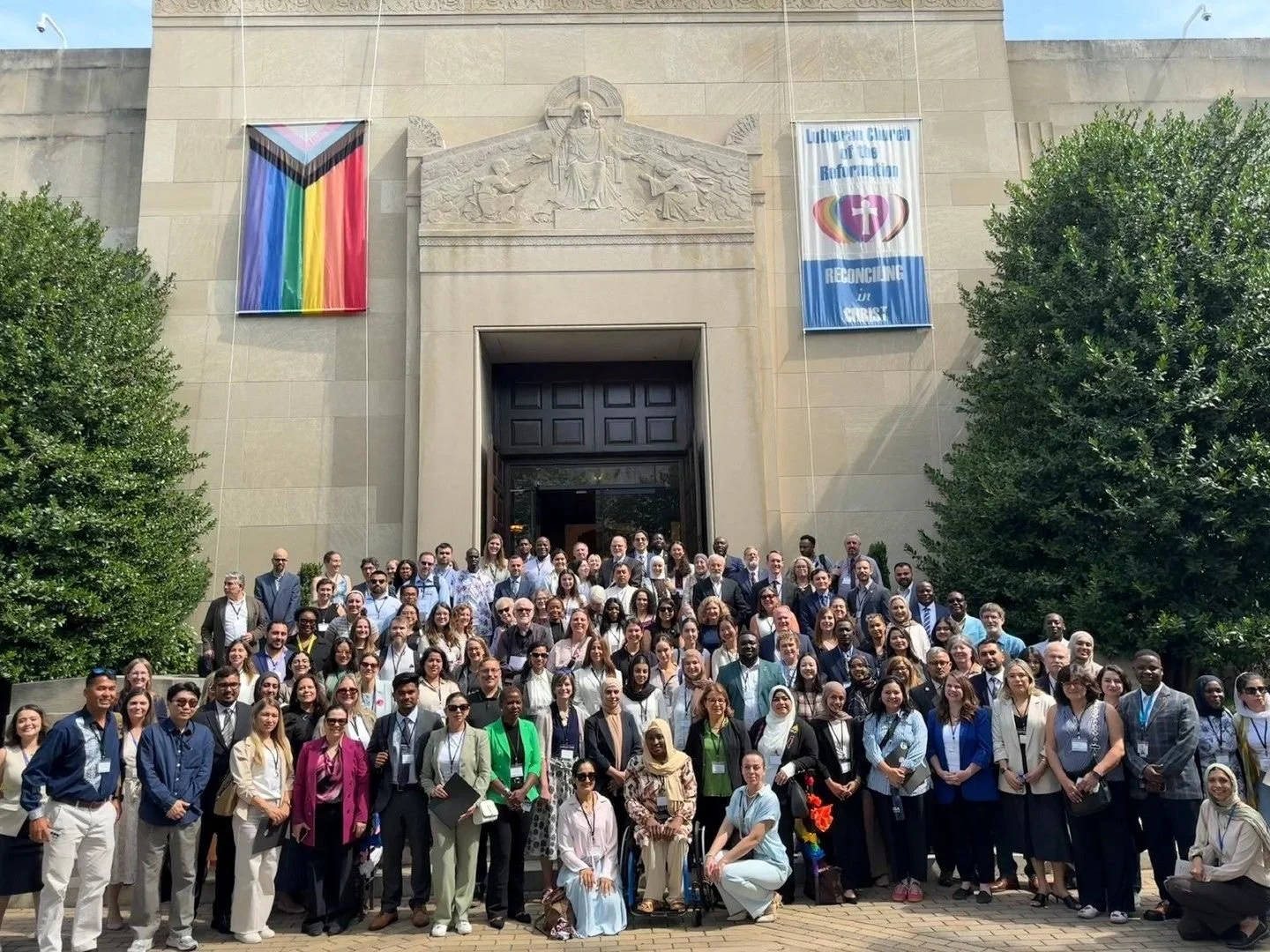
Refugee Council USA’s 2026 Advocacy Cohort
We came as part of Refugee Council USA's Advocacy Days, a gathering that centers people with lived experience of forced displacement to build relationships with congressional offices and galvanize bipartisan support for refugee, asylum, and humanitarian programs. This year, more than 300 community leaders came from 45 states to speak directly to legislators, not only about the safety of newcomers in the United States, but about funding the work that comes after someone secures their status: the long road to actually rebuilding a life here. We were there to defend the humanitarian pathways that have already been dismantled, pathways that, without action from Congress, may not come back, and to protect the programs that help families stand on their own once they arrive.
What I learned quickly is that it is the personal stories that stick, the ones that make a policy human and bring it home to a staffer who has heard a hundred asks that week. Getting to know our families, hearing their stories firsthand, coming to understand their lives on a more personal level, is the thing that makes me work as hard as I do for HMI every single day. To be one of the people carrying those stories into those rooms was a responsibility I did not take lightly.
The three of us
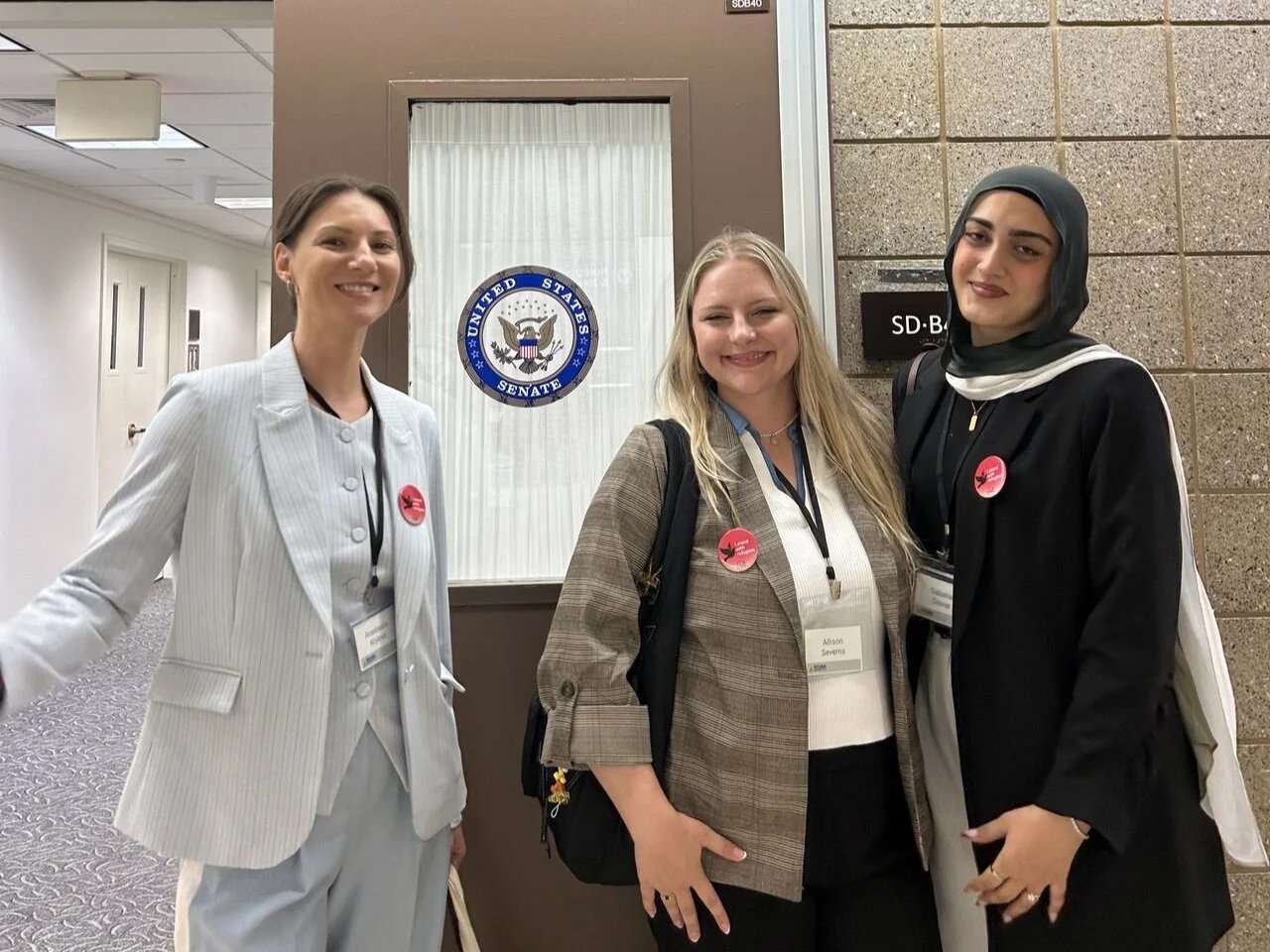
Anastasiia, Allison, and Sabahat in front of Senator Schiff’s office.
I traveled with my colleagues, Anastasiia and Sabahat, and they shared not only their own experiences but spoke on behalf of the hundreds of families we serve, telling staffers exactly what we are seeing on the ground as service providers, as harmful policies come out of Washington.
As we waited in the Dallas airport, busier than I had ever seen it, Anastasiia told me about a story she carries with her. Back home in Ukraine, they had built a thriving chain of coffee shops, and they want nothing more than to bring that same enterprise here and plant it in California's economy, to build something that lasts. But the delays in getting work authorization approved make that almost impossible, not to mention the uncertainty of Temporary Protected Status right now. She told me about people who apply, wait, and finally receive their EAD so late that by the time it arrives they are only cleared to work for a single month before it has to be renewed again. Imagine trying to build a life, a business, a future, one month at a time.
Once we were on the ground, the work got specific fast. On the first day, between meetings, Sabahat and I slipped into the Folger Shakespeare Library, right next to our home base at the Lutheran Church behind Capitol Hill, and called Friba, our Community Liaison for the Afghan community, because we needed to walk back through the legal statuses one more time before we brought them into a meeting. Status changes everything. A parolee, an asylum seeker, an SIV holder: under the new federal policies coming down on our clients almost daily, each of those statuses tells a different story and carries a different ask, and getting it exactly right is the difference between advocacy that lands and advocacy that misses.
In the rooms
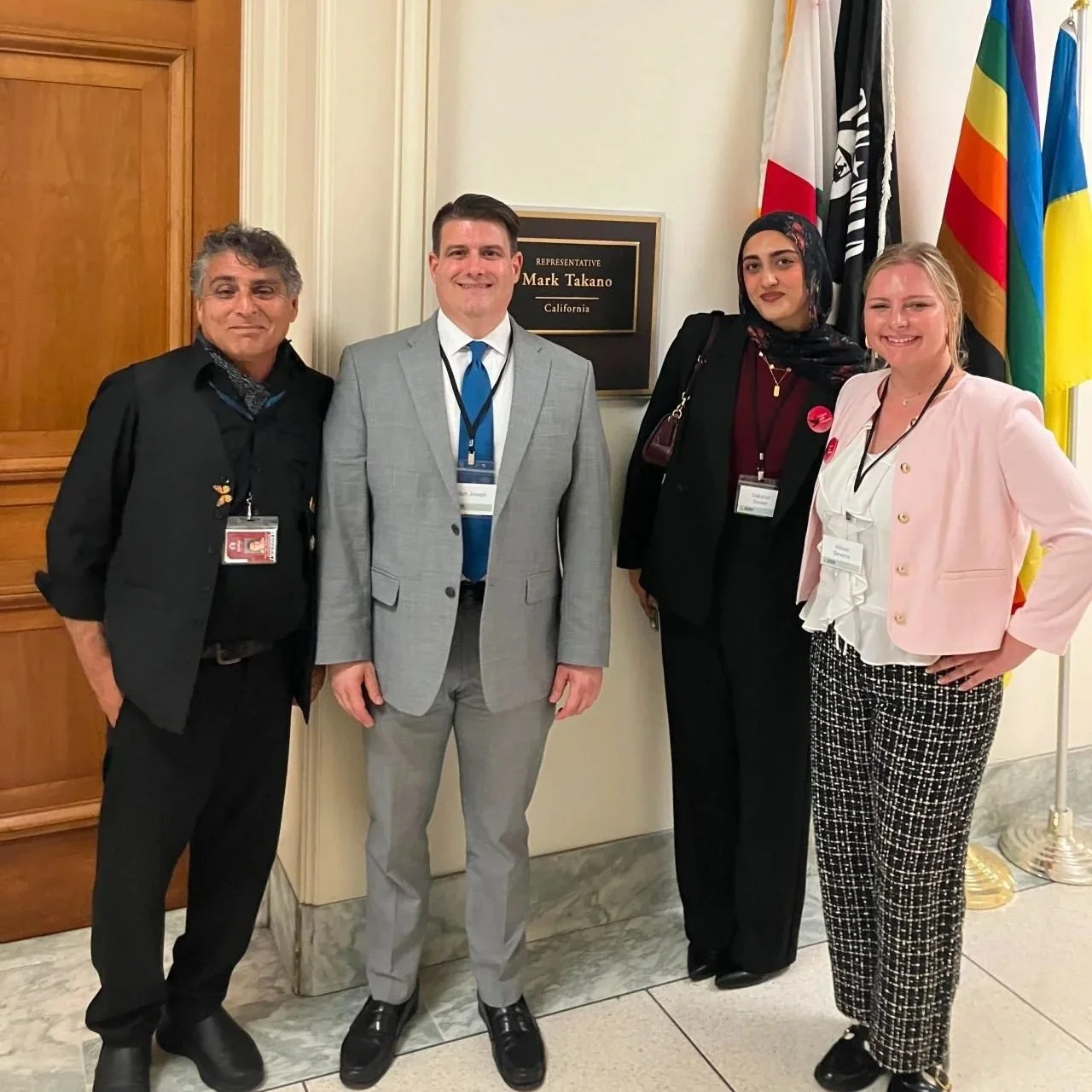
Representatives from CHIRLA, Center for Gender & Equity, and HMI in front of Congressman Takano’s DC Office.
The offices themselves were, frankly, just offices: regular rooms, well-kept staffers, the ordinary business of a workday. But the decorations told you everything. They highlighted districts, yes, but they also broadcast stances, so that you could have a Democrat and a Republican stationed directly across the hall from one another, each doorway boasting its own mementos, everyone wearing their hearts and their policies on their sleeves for anyone walking past to read.
The meetings themselves ranged widely, some intimate, just three or four of us in a room, others fifteen people deep, but in every one of them, each of us had a chance to say our piece. And finally the moment we had been preparing for, for months, was right there in front of us: a chance to be heard, to watch the staffers write down the stories and the policy asks we had carried all this way, each of us bringing a unique perspective that somehow unified us around a single goal, to safeguard refugees in the United States at a moment when they are so critically under attack. Our delegation was all women, lived-experience leaders, lawyers, community advocates, and service providers like myself. Some had come entirely on their own accord just to share their stories, alongside members of partner organizations like CHIRLA and Immigrant Defenders.
One meeting I will not forget was with Senator Padilla's office. He has been a true champion of refugee rights, and it was a relief to sit across from staffers already on the same page as us, who affirmed the very things we had come to fight for. At first I sat off to the side. But a longtime advocate I knew from our Southern California service-provider community called me up to sit beside him at the head of the table, and together we reminded the room of the two decades of service Afghan allies gave supporting our military abroad, building on each other's words to uplift the Afghan community. The essence of what he passed on to me was simple, and it is something I would tell anyone hesitating to use their voice right now: be brave, be strong, give them hell, but be kind. When it is your turn to speak, you take it.
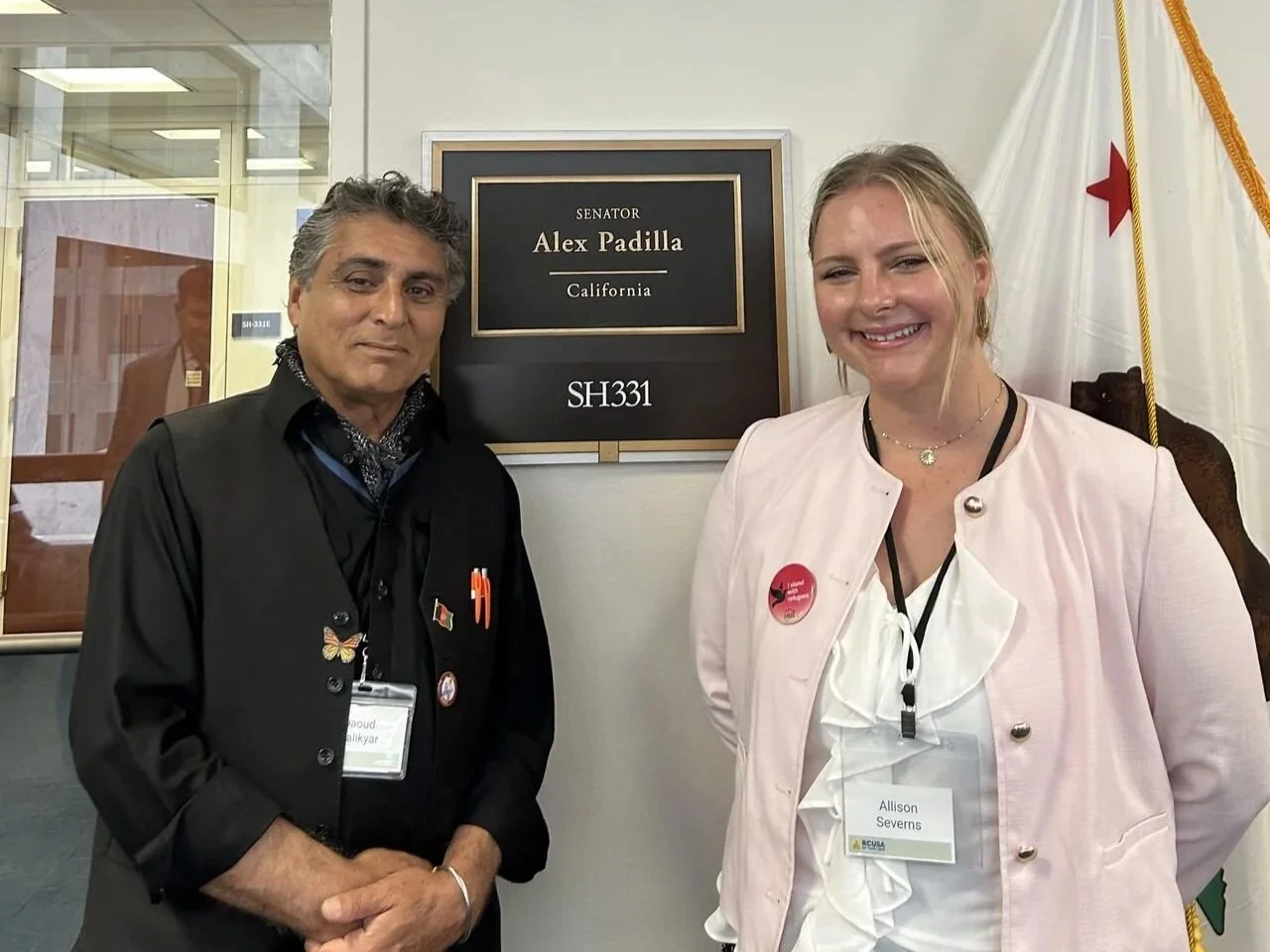
ANSP Program Managers from CHIRLA and HMI.
Everywhere we went, we were not the only ones asking. We passed delegation after delegation moving from meeting to meeting: Planned Parenthood, Code Pink, and other groups, each pressing their own case. One group of parents had brought their own children along to their meetings, putting a face on exactly what was at stake for them. So many righteous causes all flowing through the same crowded hallways at the same time. It raises a hard question, one I kept turning over: how do you push your specific message of humanity forward when so many people are fighting for so many things that all, genuinely, matter?
The families we serve could not be in those hallways themselves. So many of them do not feel safe leaving their own homes right now, let alone traveling to Washington, to the very epicenter of the policies that are discriminating against them. RCUSA told us that many lived-experience advocates who had planned to attend in person ended up canceling, and perhaps rightfully so. While we were there, the House voted 214 to 212 to send roughly $70 billion to fund Immigration and Customs Enforcement and Border Patrol through the end of the current term. The fight we had come to join was unfolding in real time, just down the hall from where we sat.
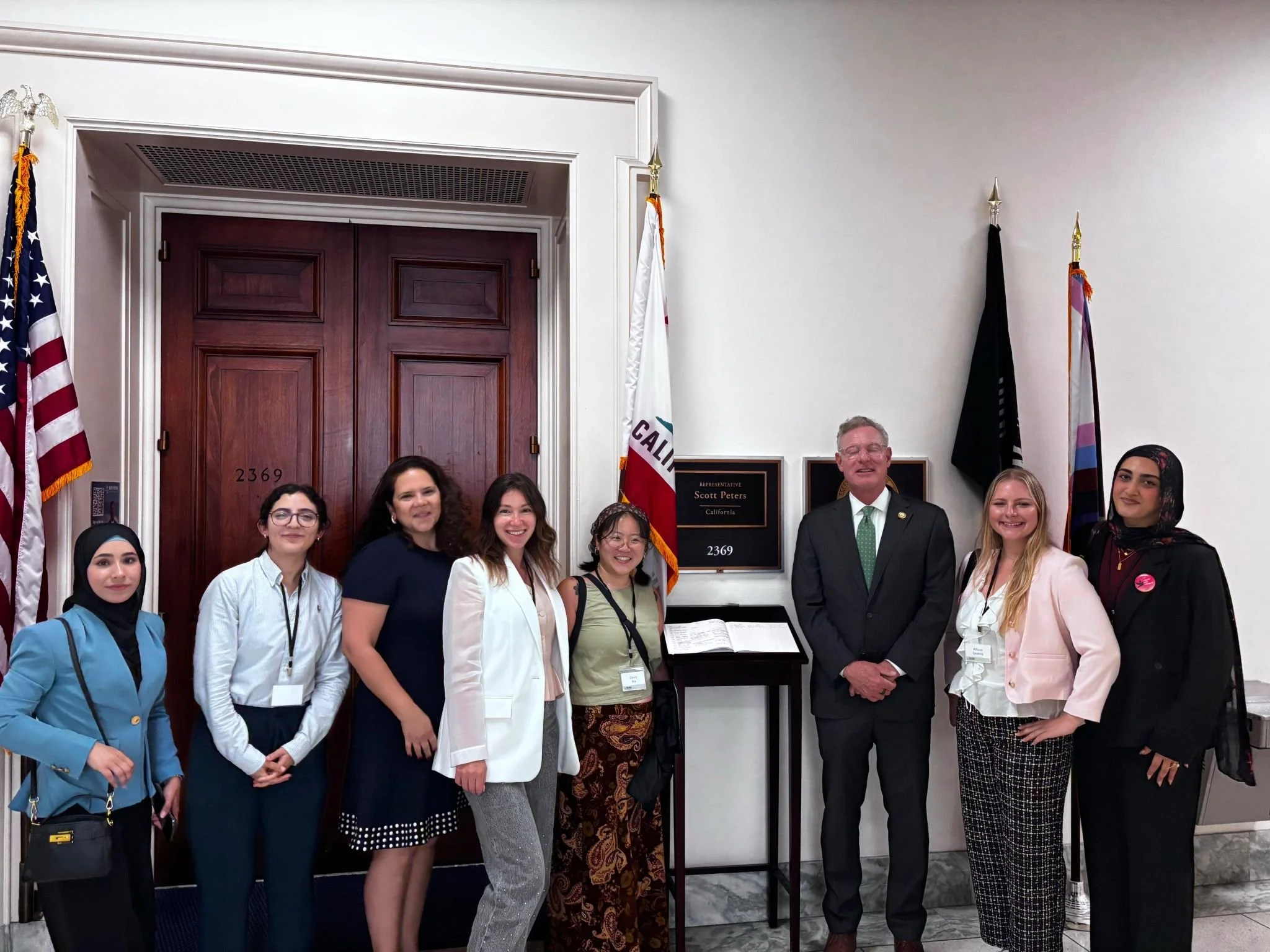
Southern California Delegation for RCUSA Advocacy Days with Representative Scott Peters
What stays with me
No one chooses to flee.
For the refugee families we serve, leaving was never a real choice. The families who worked alongside our service members in Afghanistan for two decades were hunted by the Taliban for exactly that reason, marked for helping the United States, and they did not want to go. The Ukrainian parents who lived through nights of carrying their children down to the basement, over and over, trying to keep them safe from Russian bombs falling on the only home they had ever known, did not want to go either. They came here seeking safety and the chance to start again, and in doing so they became our neighbors, and they deserve the same respect and dignity we extend without a second thought to anyone who has simply called this place home for longer, even if we do not all speak the same language at the dinner table or eat the same things for supper.
But I left Washington carrying a clear-eyed worry, too: our government is reactionary, not preventative.
You can see it right now in California's own detention centers. At Adelanto, real attention came only after a hunger strike, after people put their own bodies on the line, and not one moment before. It had to reach that breaking point before anyone moved. And that is the pattern, over and over again: we wait for the crisis instead of preventing it.
One of our Afghan clients held an SIV for his service, but his family did not qualify under the same status, so they came as parolees, through a legal pathway, having done nothing wrong. They were detained anyway, split apart for six months at Adelanto, held in deplorable conditions where no one spoke their language, while their son and brother worked multiple jobs to provide legal support for them. This is a family that followed every rule we asked of them, that stood with the United States, and our system answered by locking them up and separating them. When people ask what immigration enforcement has to do with refugees, this is the answer.
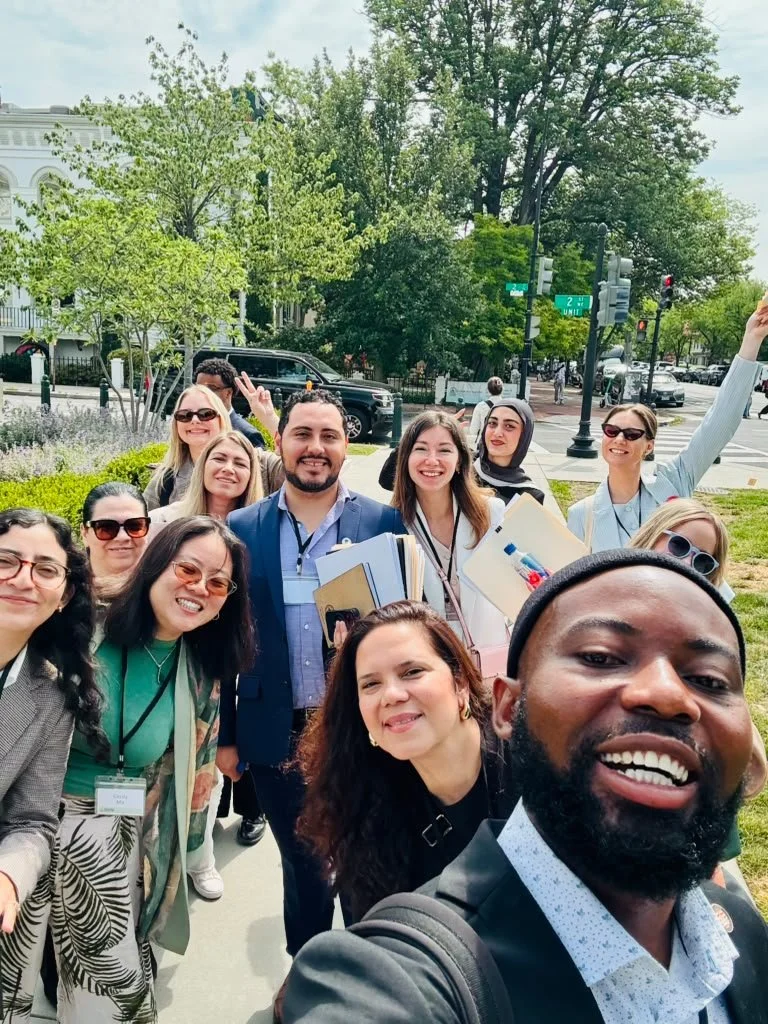
California Delegation walking together to the Rayburn Building in between advocacy meetings.
The same thing is unfolding right now at kitchen tables across our state. Because of changes in federal law, many of the families we serve have begun losing the benefits they relied on, the baseline of support that lets a family move beyond mere survival. Several saw their benefits cut by more than 60 percent with little warning, in one case dropping to a few hundred dollars a month, and our liaisons describe the financial and mental-health strain that followed. One of those households is led by a man in his sixties who lives in Riverside with vision loss in one eye, in treatment for depression, facing two thousand dollars in rent with adult daughters who cannot yet find work. His wife comes to our ESL program every single day. They are doing everything right, and still the supports they were counting on disappeared overnight. So we worked alongside them, connecting him with mental health support and helping his daughters enroll in school. These were preventable emergencies, and we are choosing them.
What too few people understand is that legal status is only half the battle. Getting a family to safety is the beginning, not the end. What Human Migration Institute does is the after: the long, unglamorous, deeply human work of integration. We help families enroll their children in school, find jobs, connect to healthcare, file their taxes, learn English, learn to drive, and navigate the endless maze of county paperwork tied to food and medical benefits. We do it in their own languages, so that families can move past the barriers between them and their own independence in a place that can feel cold and unrelenting to people who came here to save their own lives, and in a system that was never built with them in mind. We do not rebuild these lives. The families do that themselves. What we do is clear the obstacles in their way.
That is what we went to Washington to protect. And that is exactly what is now at risk.
What is at stake
On our last morning, our small, but powerful HMI cohort, Anastasiia, Sabahat, and I, walked past the building that houses Health and Human Services as we made our way to the DC subway for the last time, heading back to California. I said a small, internal prayer as we passed. Just a good thought, a hope, that families here and across the country who have come so far will not have the rug pulled out from under them right as they are finding their footing, that we will not undermine progress that has already, against the odds, been made.
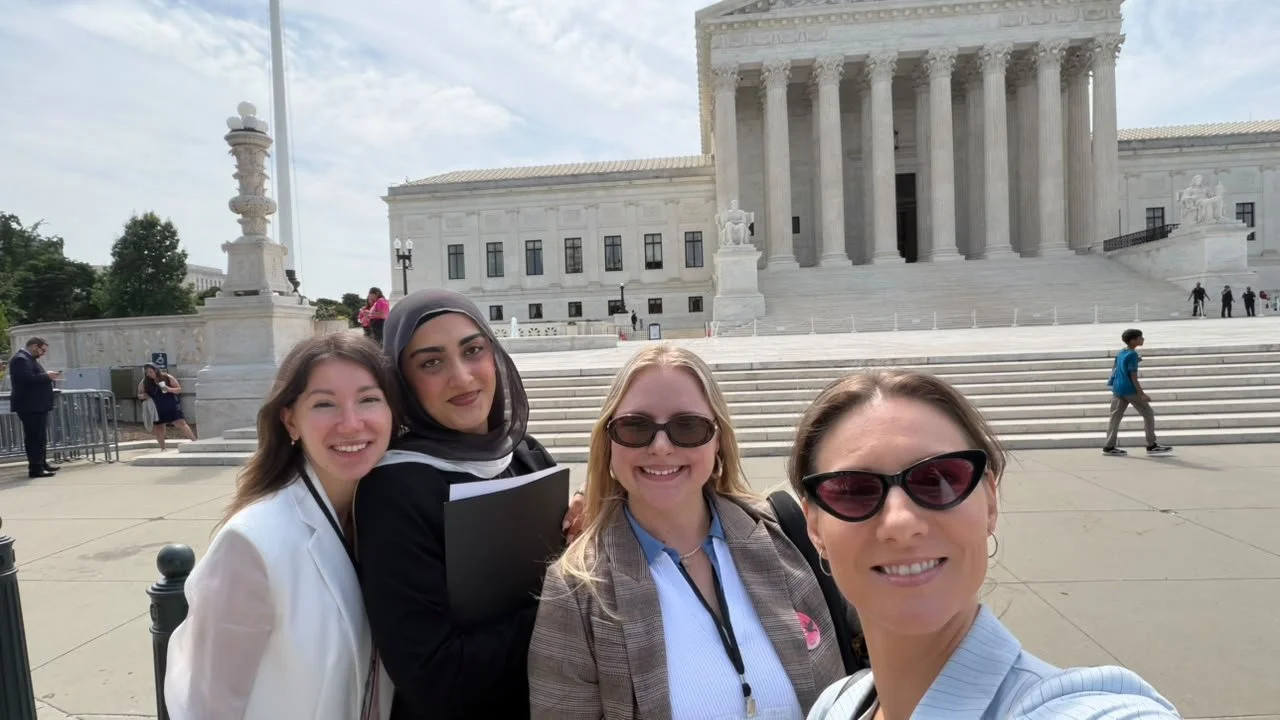
HMI colleagues with a San Diego CA Delegation member from Ukraine in front of the Supreme Court
Because the cuts have already begun. With the cancellation of federal programs through the Office of Refugee Resettlement and Health and Human Services, HMI is facing the possibility of going from a team of twenty-five down to fewer than ten, if that. Our Refugee Career Pathways program, our Afghan Newcomer Support Program, and our Ukrainian Newcomer Support Program, the very programs that do this integration work, are all on the line.
But no matter what the future holds for HMI, we are not going to stop fighting for these families, because they are not strangers to us. They are the kids we have watched grow up in our tutoring program, graduate, and go on to thrive in college. They are former doctors for our military abroad who arrived and took whatever work they could find, who we helped get recertified, and who are back in the healthcare field today. And many of them are us: a large part of our staff carries the same lived experience as the people we serve, which is why this work runs deeper than a job description. We are fighting for our own neighbors, friends, and colleagues.
That is why I keep returning to the advice I was given at the head of that conference table in Senator Padilla’s office. Be brave, be strong, give them hell, but be kind. You do not need a title or a delegation or a flight to Washington to do it. If you have a voice, this is the moment to use it, because the families being targeted right now cannot always use theirs safely, and the rest of us cannot afford to wait for the next crisis before we speak. When it is your turn, take it. That is how change begins, and it is how we will keep going, for these families and for justice, for as long as it takes.
Human Migration Institute is the only refugee-specific organization in Riverside County, serving more than 600 newcomers each year. Learn more at HMIR.org.