
How Our Mission Hired Workshop Helped Ukrainian Newcomers Land Jobs in CA
From Resumes to Résumés: Inside the Mission Hired Workshop for Ukrainian Newcomers
Job hunting in a new country is hard enough. Job hunting in a new country, in your second (or third) language, with no idea what an ATS is or why your LinkedIn photo matters so much — that's a different level of hard.
That's the gap the Mission Hired Workshop set out to close.
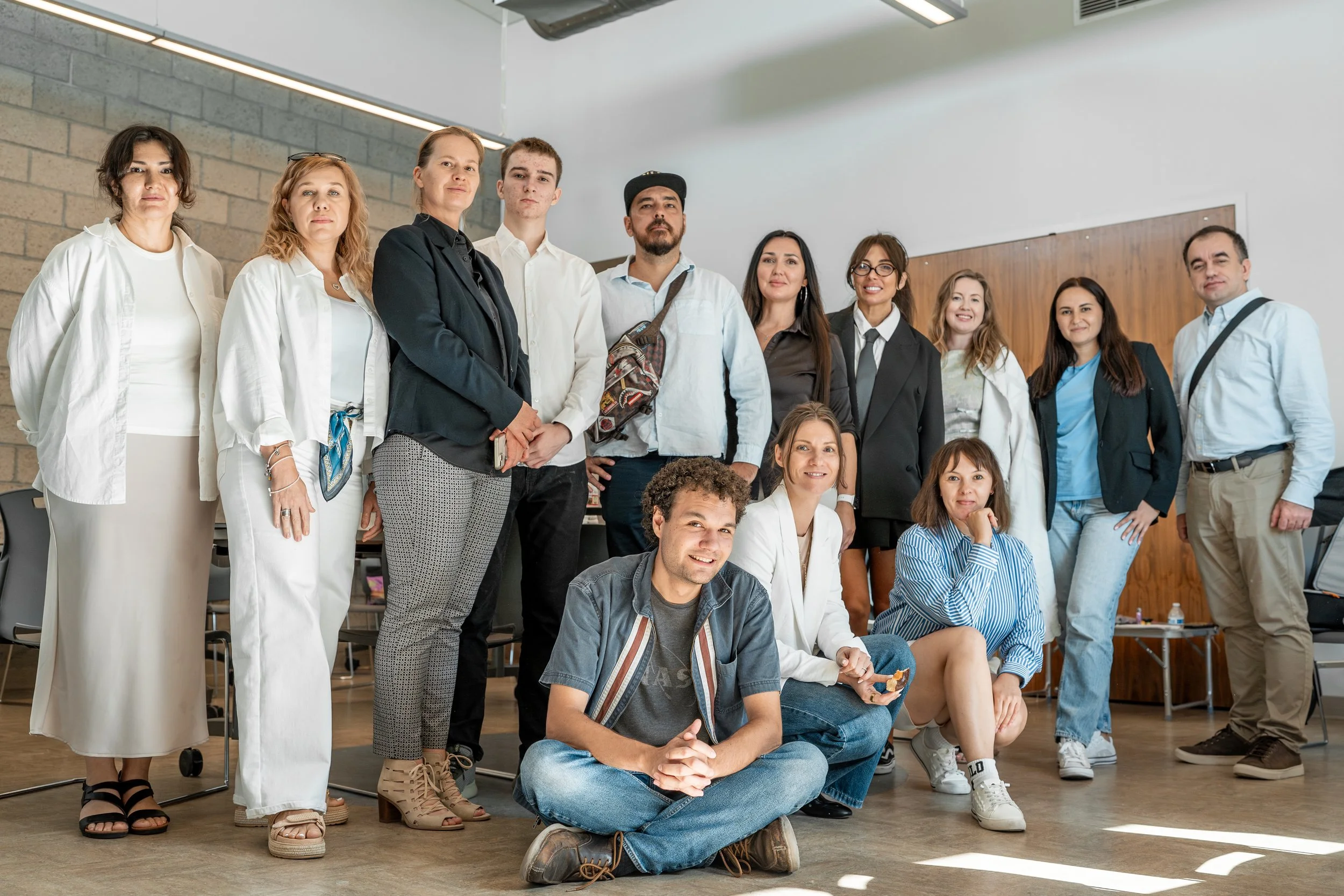
On July 25, 2026, Human Migration Institute's Ukrainian Newcomers Support Program (UNSP) team brought together 10 adults and 5 children at the Marina Park Community Center in Newport Beach, CA, for a 2.5-hour crash course in one deceptively simple goal: getting hired in America.
Learning the Rules of an Unfamiliar Game
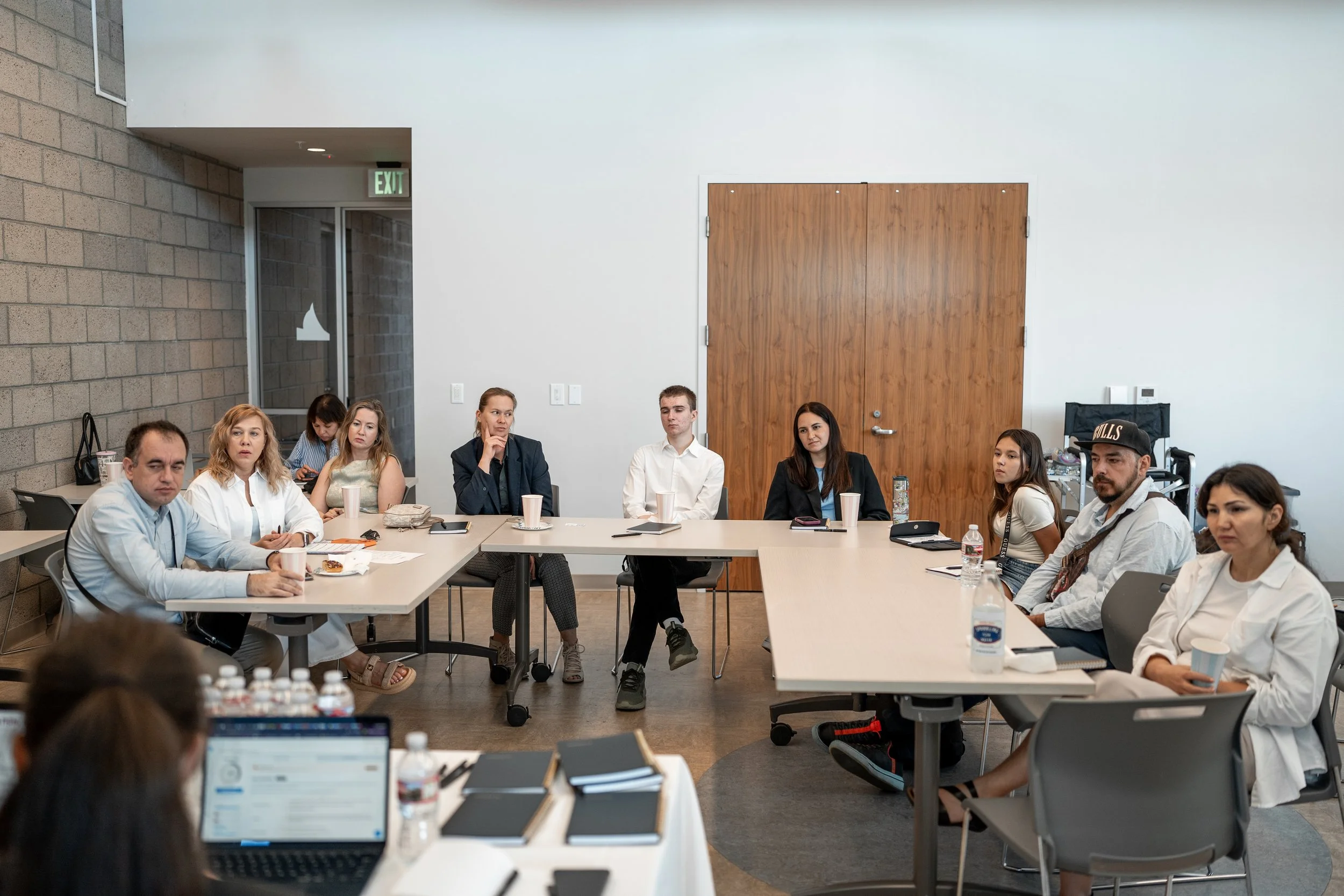
The U.S. job market runs on unwritten rules — the kind that take native-born job seekers years to absorb by osmosis. This workshop tried to hand them over all at once, through three back-to-back sessions.
Workforce Solutions for Ukrainians opened things up with a map of what's actually available: employment resources, workforce development programs, and California-specific career support that most newcomers don't know exists.
Beating the Resume Robots
Case manager, Nika, led the resume session with a number that reframed the whole room's approach: as many as 75% of resumes are filtered out by Applicant Tracking Systems before a human recruiter ever sees them. The rest of the session was essentially a rescue plan.
A few of the rules that stuck:
An American resume is a highlight reel, not a job description. Swap responsibilities for measurable wins — "Managed a team of 10" becomes "Increased sales by 20% while managing a team of 10." No photo, no age, no marital status.
Format for the robot first. Standard fonts, no tables or graphics, save as a .docx or .pdf, and mirror the exact keywords from the job posting — ATS software often can't parse anything fancier than that.
Kill the buzzwords. "Hard-working" becomes "Consistently exceeded performance targets by X%." "Team player" becomes "Collaborated cross-functionally to achieve [goal]." Vague adjectives don't survive first contact with a recruiter.
The cover letter answers three questions: Why this company? Why this position? What value will you bring? Participants were encouraged to research each employer for 10–15 minutes and weave in a genuine personal story — not recycle the same letter everywhere.
No U.S. work history yet? Build a portfolio instead. Class projects, volunteer work, and personal projects all count as real evidence of skill when a traditional resume comes up short.
The session closed with something specific to the room: guidance on navigating immigration status alongside the job search — including how asylum applicants can check their case status through the Automated Case Information System (ACIS) using their A-Number, and the importance of carrying printed copies of key documents to interviews and appointments.
Making LinkedIn Actually Work
The LinkedIn session ran like a live profile audit, walking participants through an 8-point checklist real recruiters use to size someone up in seconds: professional photo and banner, a headline that goes beyond a job title, an About section with an actual personal story, an Experience section built around outcomes instead of tasks, a tight set of keyword-matched skills, and — the point everyone underlined — visibility.
The stat that landed hardest: a complete LinkedIn profile is roughly 40 times more likely to surface real opportunities than an incomplete one.
But completeness alone doesn't get you found. The mantra of the session was simple: if you're not active, you're invisible. The weekly habit participants left with was just as simple — comment on two or three posts, and share one insight a week. One example floated in the room doubled as a first-post template for newcomers ready to find their voice: something like "5 Things I Got Wrong About Job Hunting in the US."

On the job-search mechanics side, participants learned to turn on "Open to Work," lean on Easy Apply, and apply if they meet roughly 60–70% of a posting's qualifications rather than waiting for a perfect match. The strategy that ties it together: apply, connect with someone at the company, then follow up — because applications alone rarely move the needle.
More Than a Lecture Series
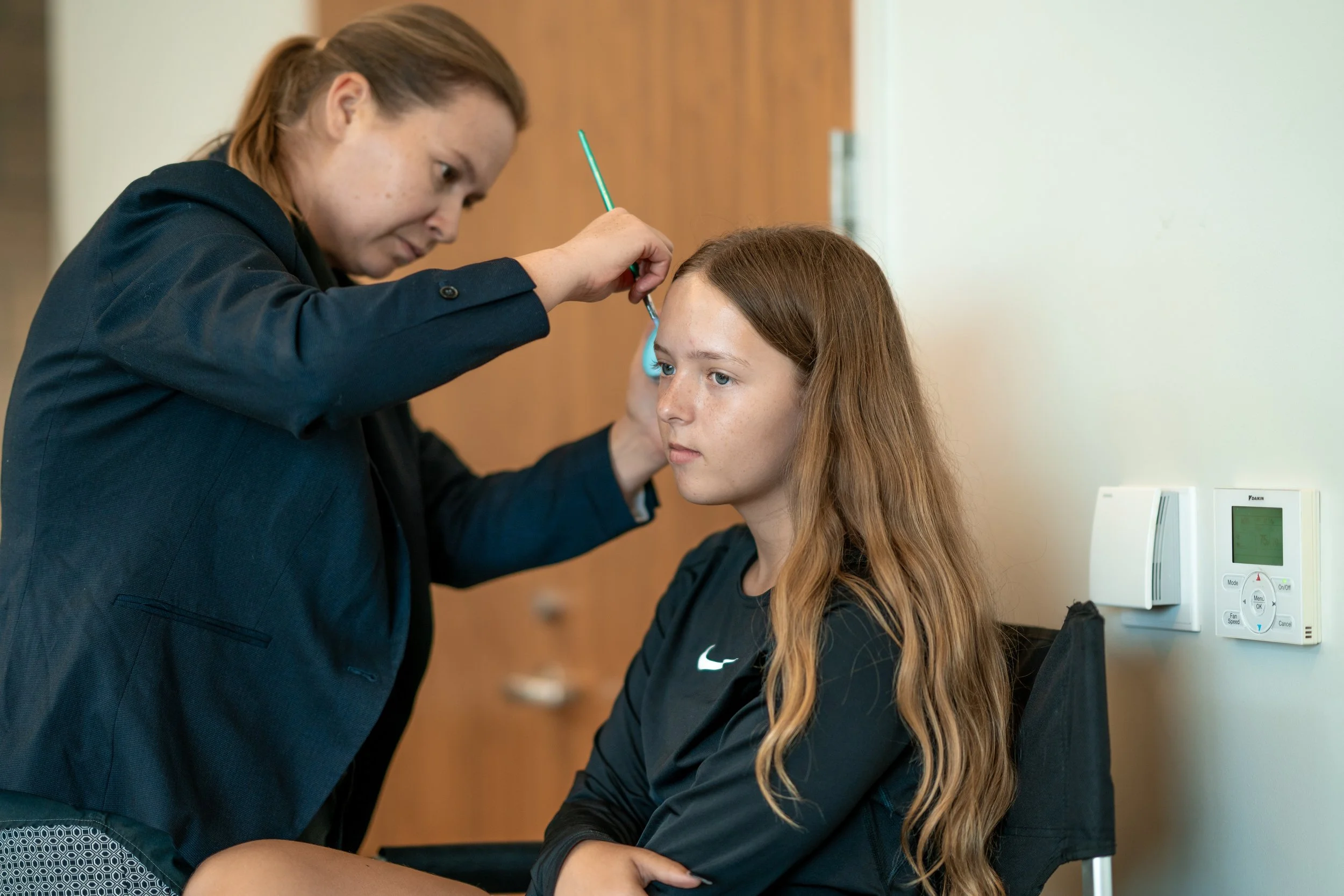
What made the day work wasn't just the content — it was the setup. While parents were in session, five kids were down the hall building with Lego and getting their faces painted, courtesy of Unicorn Magic Party, a Ukrainian-owned small business. It's a nice detail on its own: a Ukrainian business supporting Ukrainian families while their parents worked on landing their next job. With the kids happily occupied, parents got something rare — a few uninterrupted hours to focus entirely on their own careers.
And the room itself was designed to feel like something. Coffee and donuts for the adults, plus dedicated networking time, turned the community center into a stand-in for an American office — because the best way to build confidence for a professional conversation is to practice having one, low-stakes, in a room full of people rooting for you.
Every participant walked out with more than notes:
A professional LinkedIn headshot, taken on-site by a professional photographer
A LinkedIn Premium access card
A professional planner to track the job search ahead
One-on-one guidance on their resume and LinkedIn profile
A curated set of California job search resources
The Real Measure: Confidence
Workshops are easy to run and hard to make matter. This one seems to have landed. Feedback from attendees was strong across the board — participants pointed to the practical value of the sessions, the quality of the speakers, and the individualized attention as the standouts. More importantly, people left saying they felt genuinely more confident: building a competitive resume, optimizing a LinkedIn profile, understanding ATS systems, and, the point of the whole day — actually pursuing jobs in California.
For a program built to support Ukrainian newcomers, that's the win: not just information delivered, but confidence earned.